It can happen on a snowboard or a skateboard. It can also happen walking through a parking lot or across your own kitchen. One second you’re upright, and the next you’re on the ground with your hand stretched out to catch yourself.
What is a FOOSH injury?
FOOSH stands for “fall on outstretched hand.” It describes an injury to the arm that happens when you try to break a fall with your hand.
Putting a hand out is a natural reflex. The problem is that all the force of the fall travels up through your wrist, forearm, elbow and shoulder.
Common FOOSH injuries
A FOOSH can injure any part of the arm. Some of the most common include:
- Wrist fractures. A break at the end of the forearm bone near the wrist is one of the most common.
- Scaphoid fracture. A break in a small wrist bone near the base of the thumb. It can be easy to miss, so thumb-side wrist pain after a fall should be checked.
- Forearm fractures. Breaks in one or both forearm bones.
- Elbow injuries. Including fractures and dislocations.
- Shoulder dislocation. The top of the upper arm bone (humerus) slips out of its socket.
- Rotator cuff tear. A tear in the muscles and tendons that hold the shoulder in place.
- AC joint separation. An injury where the collarbone (clavicle) meets the shoulder blade (scapula).
- Collarbone fracture.
Signs and symptoms
Pain in the injured area is the most common symptom. Others include:
- Swelling and bruising
- Tenderness to the touch
- Trouble moving the wrist, elbow or shoulder
- Weakness or trouble gripping
- A visible deformity, or a joint that looks out of place
When to see a doctor
Get medical care right away if the pain is severe, a bone or joint looks out of place, you can’t move the arm, or you have numbness, tingling or skin that looks pale or cold. An orthopedic specialist or emergency provider can diagnose the injury with an exam and imaging.
Even if the pain seems mild, get checked if it hasn’t eased after a few days or if the wrist hurts near the base of the thumb.
How rehab helps after a FOOSH injury
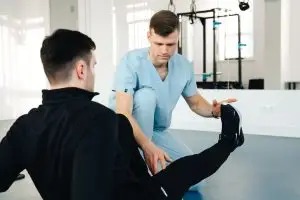
After a FOOSH injury is diagnosed and treated, many people are referred to physical or occupational therapy. Time in a cast, sling or splint leaves joints stiff and muscles weak.
Rehab focuses on getting back motion, strength, grip and coordination so you can return to everyday tasks, work and sports. For wrist and hand injuries, hand therapy focuses on the small joints and tendons that need careful attention. Your therapist will follow your doctor’s guidance on what’s safe at each stage of healing.
How to lower your risk of falling
- Keep floors smooth but not slippery. Use rugs with non-skid backing or tack them to the floor.
- Stop at curbs and check their height before stepping up or down. Watch for ramps cut into curbs, since the slope can throw you off.
- Wear supportive shoes, even at home. Avoid walking around in socks or floppy slippers.
- Keep stairways well lit, with handrails on both sides.
- Keep floors clear of clutter.
- For sports, learn the right technique, wear protective gear like wrist guards, and dress in clothes that let you move.
- Learn how to fall safely, so you’re less likely to land on an outstretched hand.
A simple plan
ProActive Physical Therapy, a Doctors of Physical Therapy company, helps people recover from FOOSH injuries at six San Diego County clinics: Carlsbad, Carmel Valley, Mission Valley, National City, Rancho Bernardo and Vista.
- Book. Once your injury has been checked by a doctor, schedule an evaluation. No referral is needed in California.
- Evaluate. A therapist can evaluate your motion, strength and the tasks you need to get back to.
- Treat. Your plan follows your stage of healing, with hands-on care, exercise and splinting if needed.
- Return. Get back to work, sports and daily life, with tips to lower your fall risk.
FAQs
What does FOOSH stand for?
Fall on outstretched hand. It’s a common way people injure the wrist, elbow or shoulder.
How do I know if my wrist is broken or sprained?
It can be hard to tell without an exam and X-rays. If you have significant pain, swelling or trouble moving the wrist after a fall, get it checked.
Do I need therapy after a wrist fracture?
Many people do, since time in a cast leads to stiffness and weakness. Your doctor and therapist can help you decide.
Can I prevent a FOOSH injury?
You can lower your risk by preventing falls at home, wearing wrist guards for board sports and practicing safer ways to fall.
Ready to get started? Schedule an appointment at any ProActive clinic or find a Doctors of Physical Therapy clinic near you. No referral needed.