Can you look over your shoulder to change lanes without turning your whole body? If not, you’re not alone, and a stiff neck can do more than make driving awkward. It can play a part in headaches and even hold back your game.
What causes limited neck motion?
Laptops, long commutes, and lots of time sitting, often slumped, have made neck tightness really common. That stiffness can affect almost anyone.
Think of a tennis player tracking a shot, a golfer turning into a backswing, or a batter watching a pitch. A receiver looking back for the ball and a basketball or lacrosse player keeping an eye on an opponent all need good neck rotation too.
Half the turn comes from one joint
Your neck has seven vertebrae, but about half of your neck rotation happens at just one level. The joint between your first vertebra (C1) and second vertebra (C2) gives you roughly 45 degrees of turn to each side.
That joint often gets tight after neck injuries like whiplash or a fall. It can even stiffen up after that “slept on it wrong” morning that never quite goes away.
When C1 and C2 aren’t moving well, the rest of the neck has to make up the difference. The lower neck joints aren’t built to rotate that much, and over time they can get overworked and break down.
The link to headaches
The greater occipital nerve runs up the back of your head, and the lesser occipital nerve runs along the side of your head above your ear. Both come from the C2 area and pass through the muscles at the base of your skull.
When those muscles and joints are tight, these nerves can get irritated. That’s behind many of the headaches people link to neck tightness.
Try these two simple self-tests
Most people don’t realize how limited their neck is, because the body is good at working around it. These checks can give you a rough idea.
Test 1: neck rotation
Sit with your left shoulder facing a mirror. Keeping your chin level, turn your head to the left. Does your chin reach over your left shoulder, or at least past the far end of your collarbone?
Now turn around and try the right side. People with limited rotation often tip their head back to get more turn, so watch for that, and it helps to have someone else check.
Next, check your posture. If you’re slouched, sit up tall and try again. Most people find they can turn further in good posture.
Test 2: control
Stand facing a mirror with your hands on your chest. Turn your shoulders left and right without moving your head at all. Your pelvis should stay still too.
If your neck turns well in Test 1 but your head moves along with your shoulders here, the issue may be stability and control rather than stiffness.
How physical therapy helps
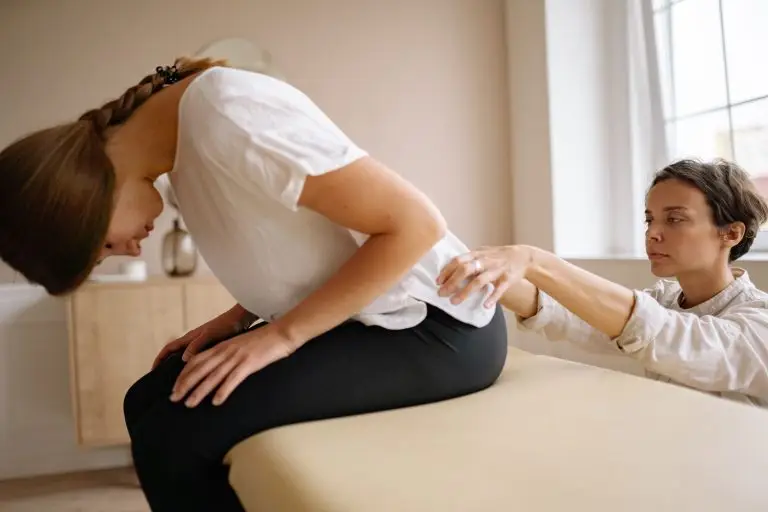
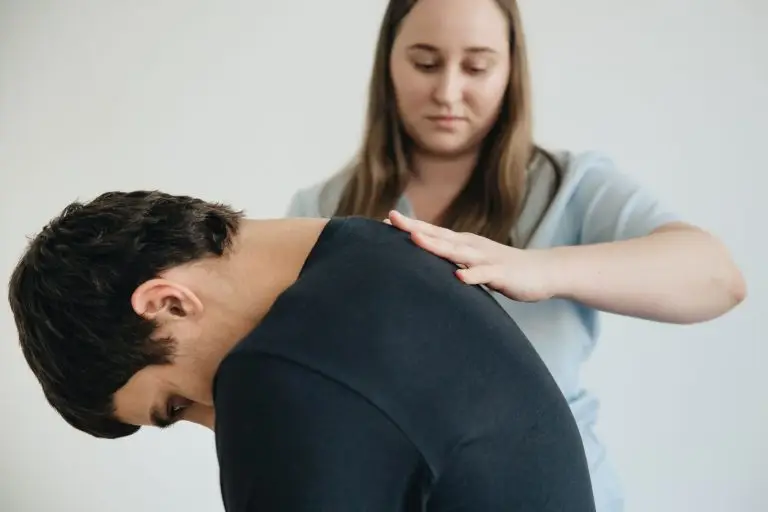
A physical therapist can evaluate whether you’re dealing with a true mobility problem, a stability problem, or both. That matters, because the right treatment is different for each.
At ProActive Physical Therapy, a Doctors of Physical Therapy company, care may include hands-on treatment for stiff joints and muscles, posture work, and exercises to keep the neck moving well. The goal is the motion you need for daily life and sport, which may also help with neck-related headaches. Learn more about our physical therapy services.
Your simple plan
- Book an evaluation at one of our six San Diego County clinics in Carlsbad, Carmel Valley, Mission Valley, National City, Rancho Bernardo or Vista.
- Evaluate: your therapist checks your neck motion, control and posture.
- Treat: you get focused care and a home program to keep your neck moving.
- Return: you get back to driving, working and playing with better rotation.
When to see a doctor
See a doctor right away if neck pain follows a car accident or fall, or if you have numbness, tingling or weakness in your arms. A sudden, severe headache, dizziness, trouble speaking, or fever with a stiff neck also needs urgent medical care.
FAQs
Can a stiff neck really cause headaches?
It can. Tight muscles and joints at the top of the neck can irritate nerves that run up the back and side of the head.
Why does my neck turn better one way?
Old injuries, sleep position and daily habits can tighten one side more than the other. A physical therapist can evaluate why.
Will better neck motion help my sport?
It may. Many sports depend on tracking a ball or another player, and a neck that turns well makes that easier.
Is it safe to stretch my neck on my own?
Gentle movement is usually fine. Stop if you feel sharp pain, dizziness or tingling, and get checked.
California allows direct access to physical therapy, so no referral is needed to start. If a stiff neck is giving you headaches or hurting your game, book an evaluation.
Ready to get started? Schedule an appointment at any ProActive clinic or find a Doctors of Physical Therapy clinic near you. No referral needed.