Head drifts forward. Shoulders round in. Upper back curls over. If that sounds like your reflection, you are looking at upper crossed syndrome, and it is not a discipline problem. It is a strength and mobility problem, which is why physical therapy for posture works when reminders to sit up straight do not. Your body is not being lazy. It is holding the shape you have trained it into for eight hours a day.
Here is what is actually going on, what the research supports, and what treatment looks like when a licensed physical therapist runs it.
What Upper Crossed Syndrome Actually Is
Upper crossed syndrome describes a predictable pattern. Two groups get tight and short: the chest muscles and the muscles running up the back of the neck into the upper shoulders. Two groups get long and weak: the deep neck flexors at the front of the throat and the muscles between and below the shoulder blades.
Draw a line between those pairs and they cross. That is where the name comes from.
The pattern matters because it feeds itself. A forward head puts more load on the neck. The neck muscles work harder and get tighter. Tighter chest muscles pull the shoulders further forward, which shrinks the space the rotator cuff tendons pass through. Now you have neck tension, headaches, and a shoulder that pinches when you reach overhead, all from the same root.
Why Physical Therapy for Posture Works Better Than Willpower
You can hold a good position for about ninety seconds. Then attention goes somewhere else and the body returns to whatever it is strong enough to hold without thinking. Posture is not a decision. It is a default, and defaults are set by capacity.
That is the entire case for physical therapy for posture. Change what the muscles can hold and the default changes with it.
The evidence is honest about what that does and does not fix. A 2026 systematic review and meta-analysis in BMC Sports Science, Medicine and Rehabilitation found that corrective exercise reliably improves the measurable posture angles in upper crossed syndrome, while the effect on pain and function varied between studies. A separate 2026 randomized pilot trial in Scientific Reports compared motor control training against soft tissue work and found the active training approach carried the results.
Read together, those two findings point the same direction. Stretching and hands-on work open the door. Active retraining is what walks through it. A good physical therapy for posture program uses both, in that order, and does not stop at the passive part.
5 Physical Therapy for Posture Treatments That Hold
1. Restoring Motion in the Upper Back
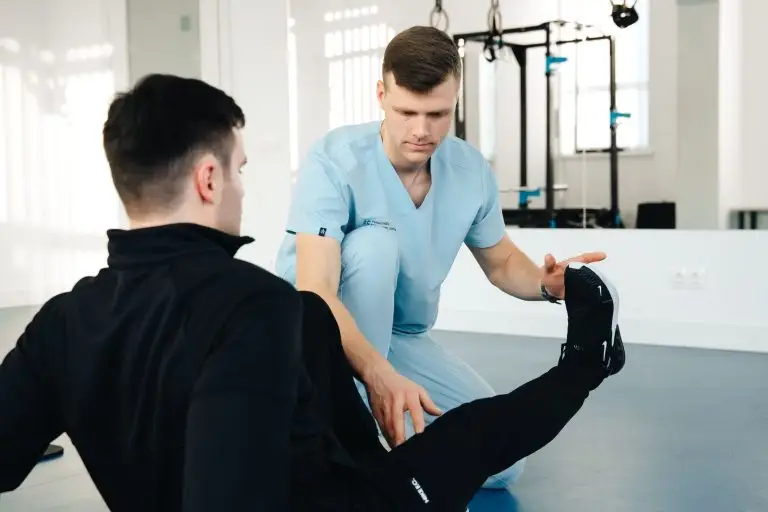
A stiff mid back forces the neck and shoulders to compensate for motion the spine should be supplying. Manual therapy is used to restore extension and rotation through the thoracic spine, which is the foundation everything else is built on.
2. Opening the Front of the Chest and Shoulders
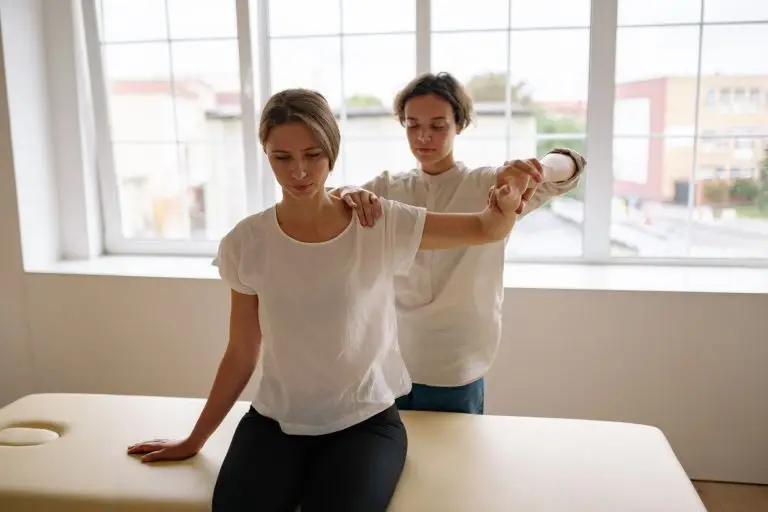
Short chest and front-of-shoulder tissue anchors the shoulders forward. Targeted stretching and soft tissue work reduce that pull so the shoulder blades can sit back where they belong.
3. Waking Up the Deep Neck Flexors
These small muscles at the front of the neck hold the head over the shoulders. They are almost always weak in a forward-head pattern, and they are almost never trained on purpose. Retraining them is one of the highest-value pieces of the whole program.
4. Building the Muscles Between the Shoulder Blades
The mid and lower trapezius and the serratus anterior control where the shoulder blade sits and how it moves. Strengthening them is what gives the upper back something to hold a position with instead of just a reminder to try harder.
5. Rebuilding the Default Through Motor Control
The last step is teaching the new position under real conditions: while reaching, lifting, carrying, and working. This is the step the research says carries the results, and it is the step home programs from the internet almost always skip.
When Posture Is Not the Whole Story
Not every stiff neck or aching shoulder is postural. Numbness or tingling running down an arm, weakness in the hand, unexplained weight loss, or night pain that wakes you up all need a proper evaluation before any exercise program starts. A licensed physical therapist screens for these at the first visit and routes you elsewhere when something else needs ruling out.
Who Treats You at Doctors of Physical Therapy
Your care is delivered by a licensed physical therapist: not a tech, not an aide, not an assistant. Doctors of Physical Therapy is clinician-led from top to bottom, and every operational role is held by a licensed physical therapist. The people setting the standard are the people who have treated this pattern hundreds of times.
You can read more about how we practice, or look through the services we offer before your first visit.
You Can Start Without a Referral
In most states you can see a physical therapist directly, without a doctor’s visit first. Posture problems build slowly, which is exactly why people put off doing anything about them. You do not have to. Book an appointment and get a real evaluation of what is tight, what is weak, and what to do about it.
Frequently Asked Questions
Can physical therapy for posture fix a forward head position?
Research shows corrective exercise programs reliably improve the measurable posture angles, including forward head position. The gains come from restoring motion in the upper back and building strength in the deep neck flexors and mid back, not from reminding yourself to sit up.
Are posture braces worth using?
A brace holds the position for you, which means the muscles that should be doing the work are not. It can be useful as a short-term cue alongside active training. Used on its own, it does not build the capacity that changes your default position.
How is physical therapy for posture different from a stretching routine?
Stretching addresses the tight half of the pattern and leaves the weak half alone. That is why relief from stretching alone tends to be temporary. A full program treats both sides and then retrains the position under load. The American Physical Therapy Association is a good starting point for understanding the standards behind that approach.
Will physical therapy for posture help my neck and shoulder pain too?
Often, though the evidence on symptom relief is less consistent than the evidence on posture change itself. Because forward head position and rounded shoulders raise the load on the neck and narrow the space the shoulder tendons pass through, addressing the pattern frequently improves both. Your physical therapist will evaluate whether posture is actually driving your symptoms before building the plan around it.