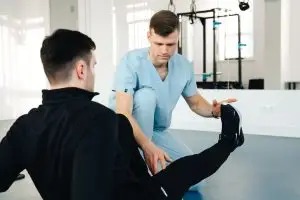
Has your child been limping off the field or complaining that their heels hurt after practice? For a long time, parents were told this was just growing pains. If the pain sits at the back of the heel, though, it may be a common overuse condition called Sever’s disease.
What is Sever’s disease?
Sever’s disease (also called calcaneal apophysitis) is irritation of the growth plate at the back of the heel bone. Despite the name, it isn’t a disease. It’s an overuse problem in a growing body.
The calf muscles connect to the heel through the Achilles tendon. Every time a child runs or jumps, that tendon pulls on the growth plate. With lots of repetition, the growth plate gets inflamed and sore.
It’s most common between about ages 9 and 15, while the heel’s growth plate is still open. Once that growth plate closes, Sever’s disease goes away on its own.
Who gets it and why
Kids in sports with lots of running and pounding are most likely to have it, like soccer, basketball and gymnastics. Growth spurts play a part too. Bones can outgrow the muscles around them for a while, which leaves the calf and Achilles tight and pulling harder on the heel.
Foot shape can add stress as well. Feet that roll in a lot, or very high arches that don’t absorb shock well, can both load the heel more.
Signs and symptoms
- Pain at the back or bottom of the heel during or after activity
- Tenderness when the heel bone is pressed or squeezed from both sides
- Pain when pushing up onto the toes
- Tight calves, or limited ability to bend the ankle up
- Limping, or walking on tiptoes, after sports
Sever’s disease is usually identified with a hands-on exam. X-rays often look normal, so they’re mainly used to rule out other problems.
What helps
Like most overuse injuries, Sever’s disease responds best when it’s caught early. The first step is calming things down with icing and relative rest, which means cutting back on the activities that flare the heel without shutting your child down completely.
A sports physical therapist has two goals. One is to let the heel settle. The other is to keep your child from losing the fitness they’ve worked for.
Core strengthening, flexibility work and some lower-impact cardio can often continue as long as symptoms don’t get worse.
Early treatment usually focuses on:
- Calf flexibility. Gentle stretching, often starting off the feet with a strap and progressing to standing stretches.
- Soft tissue work. Hands-on care for the calf and Achilles, which may include Active Release Technique or Graston Technique to improve tissue mobility and circulation.
- Footwear support. Shoe inserts can help a foot that rolls in too much or cushion a high arch. A small heel lift or heel cup can reduce strain on the growth plate.
As the heel calms down, the focus shifts to strength and balance. A stronger leg, from the hips down to the feet, absorbs shock better. Balance drills on different surfaces teach young athletes to control their bodies, which helps lower the chance of a repeat flare.
A safe return to sports
Jumping right into full games is a common reason heel pain comes back. A good return plan builds load in steps.
For a soccer player, that might mean ball touches and handling drills first, then controlled team drills, then full-speed scrimmages before games. Each step moves forward only if the heel handles the one before it.
A simple plan
At ProActive Physical Therapy, a Doctors of Physical Therapy company, we help young athletes in our six San Diego County clinics (Carlsbad, Carmel Valley, Mission Valley, National City, Rancho Bernardo and Vista) work through heel pain like this:
- Book. Schedule an evaluation. No referral is needed in California.
- Evaluate. A physical therapist can evaluate the heel, calf flexibility, foot mechanics and how your child moves.
- Treat. Your child gets a plan to calm symptoms, stay fit and build strength and balance.
- Return. A step-by-step return to sport, shared with parents and coaches.
When to see a doctor
Check in with your child’s doctor if heel pain lasts even with rest, wakes them at night, or comes with redness, warmth, fever or swelling. Pain after a fall or a hard landing, or pain that makes it hard to put weight on the foot, should also be checked to rule out a fracture.
FAQs
Is Sever’s disease the same as growing pains?
No. Growing pains are usually a vague ache in the legs at night. Sever’s disease is pain at a specific spot on the heel that’s tied to activity.
Does my child have to stop playing sports?
Not always. Many kids can stay active with changes to how much and how hard they play. A physical therapist can evaluate your child and help you find the right level.
Will Sever’s disease cause long-term problems?
It typically settles once the heel’s growth plate closes. Managing it well in the meantime helps your child stay active and comfortable.
Can the right shoes help?
Supportive, well-cushioned shoes can make a difference. Inserts or a heel cup may help some kids, and your therapist can tell you what fits your child’s foot.
Ready to get started? Schedule an appointment at any ProActive clinic or find a Doctors of Physical Therapy clinic near you. No referral needed.