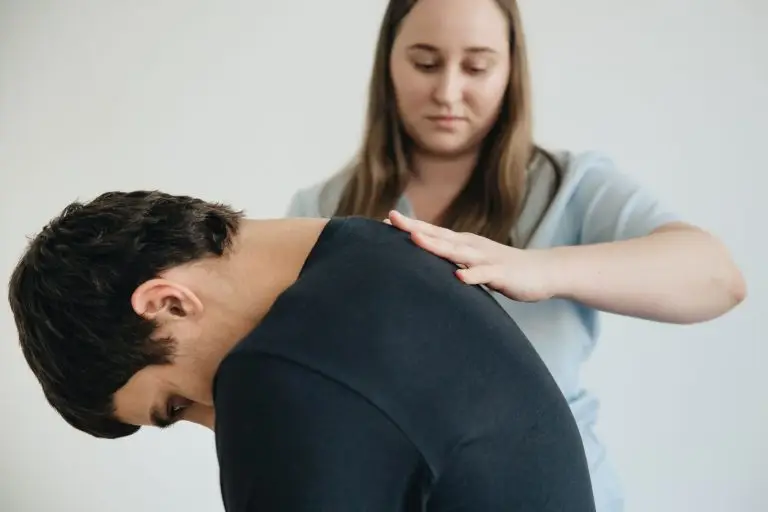
If your shoulder aches when you reach overhead, put on a jacket, or grab something off the back seat, you’re not alone. Shoulder tendonitis is one of the most common problems physical therapists see. The good news is that catching it early gives you the best shot at keeping it from turning into something bigger.
What’s going on in your shoulder
Your rotator cuff is a group of four muscles that cup around the top of your arm bone, called the humeral head. Their main job is to hold that ball steady in the socket and guide it as you lift your arm away from your body.
When those muscles get weak or tight, the shoulder’s mechanics start to break down. Surfaces rub more than they should, and that extra friction is where tendonitis usually begins.
Because of where they sit, the supraspinatus tendon (on top of the shoulder) and the biceps tendon are often the first to get irritated. Nearby tissue, like the bursa and the infraspinatus tendon, can get inflamed too.
It often starts without an injury
Most shoulder tendonitis is “non-traumatic.” That means there was no fall, no car accident, and no single moment you can point to. It just builds over time from how you use your arm.
Why it tends to get worse
Overhead reaching, reaching out in front of you, and lifting or carrying things all keep stirring up an irritated shoulder. So the pain hangs around.
Then the body tries to protect itself. We take ibuprofen and start doing our work, workouts and sports a little differently to dodge the pain. Those workarounds can add more stress to the shoulder over time.
The body also lays down scar tissue as it tries to heal and protect the area. That extra tissue can add to the irritation. Day by day, the shoulder can get weaker and more inflamed.
From tendonitis to a rotator cuff tear
Picture a rope that slowly frays. If a tendon stays irritated long enough, it can get worn and weak, and eventually it can tear. That’s what a rotator cuff tear is.
Rotator cuff tears can be painful, limit what you can do, and sometimes need surgery. That’s the main reason to take ongoing shoulder pain seriously early on.
How physical therapy helps
Shoulder tendonitis is treated differently depending on how irritated it is, what your days look like, and what you want to get back to. There’s no one-size-fits-all program.
At ProActive Physical Therapy, a Doctors of Physical Therapy company, your therapist starts by figuring out what’s driving the problem. Care often includes restoring motion, strengthening the rotator cuff and the muscles around the shoulder blade, hands-on work, and changing how you move during the tasks that set it off. Learn more about our physical therapy services.
Be patient and give the plan time to work. The shoulder took a while to get irritated, and it takes steady work to settle it down.
Your simple plan
- Book an evaluation at one of our six San Diego County clinics in Carlsbad, Carmel Valley, Mission Valley, National City, Rancho Bernardo or Vista.
- Evaluate: your therapist checks motion, strength, posture and how your shoulder moves.
- Treat: you get focused care and a home program matched to your stage and goals.
- Return: you work back into lifting, sports and everyday reaching with better mechanics.
When to see a doctor
If shoulder pain hangs around for more than a couple of weeks, that’s a sign to get it checked. See a doctor right away if pain follows a fall or accident, if you suddenly can’t lift your arm, or if you have numbness, tingling, fever or chest pain along with shoulder pain.
FAQs
Is shoulder tendonitis the same as a rotator cuff tear?
No. Tendonitis is irritation of the tendon. A tear means the tendon has actually been damaged, and long-standing tendonitis is one way that can happen.
Should I just rest it?
Easing off the moves that flare it up can help, but rest alone usually doesn’t fix weak or tight muscles. A physical therapist can evaluate what your shoulder needs.
Why does my shoulder hurt at night?
Many people with shoulder tendonitis notice pain when lying on the sore side. Your therapist can suggest sleep positions that take pressure off the shoulder.
Can I keep working out?
Often yes, with changes. Your therapist can help you adjust what you lift and how you move so you stay active without stirring things up.
Think about how often you use your shoulder: turning off the alarm, cooking, driving, brushing your teeth, folding laundry, getting dressed. Take care of it and it will take care of you.
California allows direct access to physical therapy, so you don’t need a referral to start. Book an evaluation today.
Ready to get started? Schedule an appointment at any ProActive clinic or find a Doctors of Physical Therapy clinic near you. No referral needed.