The hit looked routine. Your athlete got up, walked off, said they were fine. Three days later they are still squinting at a screen, still foggy in class, still dizzy when they turn their head fast. That gap between “looked fine” and “still not right” is where concussion physical therapy does its work. A concussion is a brain injury, and the symptoms that linger are usually coming from systems you can actually train: the neck, the balance system, the eyes, and the body’s tolerance for exertion.
Here is what the current evidence says, and what a licensed physical therapist does with it.
Rest Is the Start, Not the Treatment
The old advice was a dark room until symptoms disappear. That advice is gone. The 2023 international consensus statement on concussion in sport recommends a brief period of relative rest in the first 24 to 48 hours, then a gradual return to light activity that stays below the level that worsens symptoms. Extended rest past that window is associated with slower recovery, not faster.
That shift is the whole reason concussion physical therapy matters. There is an active job to do, and doing it under supervision beats waiting it out.
What Concussion Physical Therapy Actually Treats
Nobody treats the brain directly. What a physical therapist treats are the systems that get knocked sideways by the same force and then keep symptoms alive. A clinical practice guideline published in the Journal of Orthopaedic and Sports Physical Therapy lays out the areas that respond to physical therapy after concussion and mild traumatic brain injury:
- The neck. The same whiplash force that moves the brain strains the cervical spine. Neck-driven headaches and dizziness are extremely common and extremely treatable.
- The vestibular system. The inner ear and its connections to the brain. This is the dizziness, the room-spinning, the unsteadiness in a crowded hallway.
- The eyes. Convergence and tracking problems make reading, screens, and scanning a field genuinely hard.
- Exertion tolerance. The heart rate at which symptoms start to climb, and the structured work to raise it.
- Balance and motion sensitivity. Especially when the head and body have to move in different directions at once.
5 Steps in a Concussion Physical Therapy Plan
1. A Real Evaluation, Not a Sideline Check
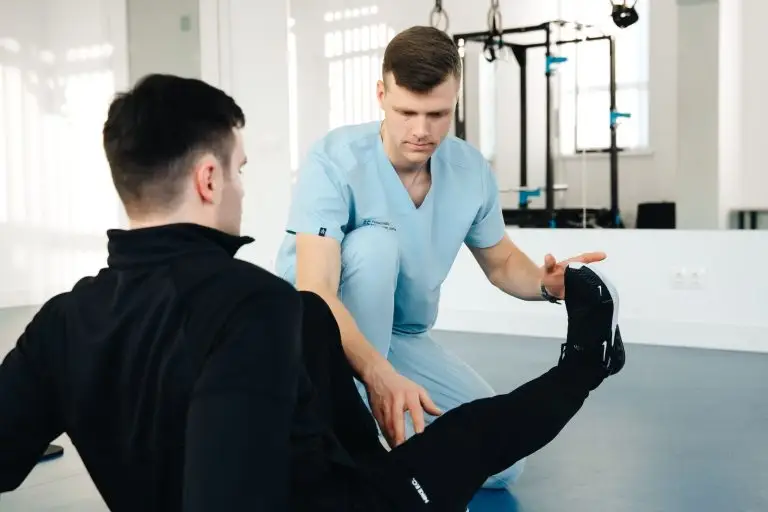
Your physical therapist screens the cervical spine, tests balance under several conditions, checks eye movement and convergence, and identifies which system is actually producing each symptom. Two athletes with identical headaches often need opposite treatment. One has a neck problem, the other has an ocular one. This is the kind of differential reasoning the clinical practice guidelines physical therapists work from are built around.
2. Treating the Neck
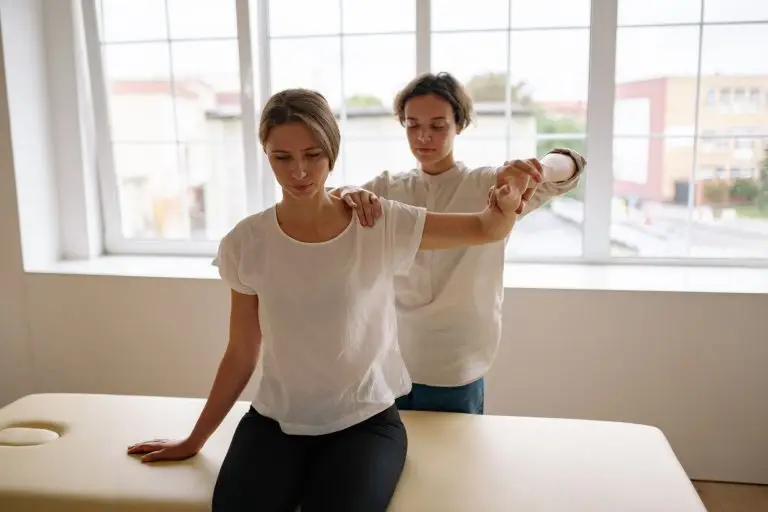
When the cervical spine is a driver, hands-on treatment and deep neck strengthening take symptoms down quickly. This is ordinary musculoskeletal work, and it is often the fastest win available. Manual therapy plus targeted strengthening for the small stabilizing muscles is the core of it.
3. Vestibular and Visual Retraining
Gaze stabilization, habituation to the movements that provoke symptoms, and graded balance work retrain the systems that keep you oriented. It is uncomfortable by design. The dose is controlled so symptoms rise slightly and settle, which is how the system adapts.
4. Graded Aerobic Exertion
Your therapist establishes the heart rate where symptoms begin, then prescribes sub-threshold aerobic work below it and moves the ceiling up as tolerance improves. This is the piece that most often separates an athlete who stalls from one who progresses, and it is the piece a rest-only approach never gets to.
5. A Staged Return to Sport
The consensus framework moves an athlete through progressive stages: light aerobic work, sport-specific movement, non-contact drills, then full-contact practice after medical clearance, then game play. Each stage has to be cleared without a return of symptoms before the next one starts. Sports therapy is where that progression gets built into real practice demands instead of a checklist on paper.
One thing to be clear about: diagnosis and final medical clearance for contact belong to a physician. Concussion physical therapy runs the rehabilitation between those two points, and a good therapist communicates directly with the medical provider managing the case.
Who Treats Your Athlete at Doctors of Physical Therapy
The person running the evaluation and every session after it is a licensed physical therapist. Not a tech, not an aide, not an assistant. With a head injury, that distinction is not a preference, it is the reason a subtle change in eye movement or balance gets caught instead of missed.
Doctors of Physical Therapy is clinician-led from top to bottom. Every operational role in the company is held by a licensed physical therapist, which is why clinical judgment, and not a protocol printed on a wall, drives the plan. You can read more about how we are built.
When to Get Evaluated
If symptoms are still present after the first few days, if dizziness or headaches come back the moment activity picks up, or if an athlete is stuck in a return-to-play progression, that is the point to get a physical therapist involved. Waiting for symptoms to resolve on their own is exactly the approach the current evidence moved away from.
In most cases you can start without a doctor’s referral first. Check how insurance works here, and when you are ready, schedule an appointment.
Frequently Asked Questions
When should concussion physical therapy start?
Current guidance supports a brief period of relative rest in the first 24 to 48 hours, followed by gradual reintroduction of light activity. If symptoms are persisting beyond the first several days, or if dizziness, headache, or visual symptoms return with activity, that is a clear point to be evaluated. Waiting weeks in a dark room is no longer supported by the evidence.
Can a physical therapist clear my athlete to return to contact?
No. Final medical clearance for full contact is a physician decision. A physical therapist manages the rehabilitation and the staged return-to-sport progression, documents how each stage is tolerated, and communicates that directly to the physician managing the case. The two roles work together, and neither replaces the other.
Why does my neck hurt after a concussion?
Because the force that moved the brain also moved the neck. Cervical strain and concussion frequently happen in the same impact, and neck-driven headaches and dizziness can look identical to symptoms people assume are purely from the brain injury. This is one of the most treatable pieces of the picture, and it is a routine part of the evaluation.
Is exercise safe after a concussion?
Structured, sub-threshold aerobic exercise is not only safe for most people, it is part of current best practice. The key word is sub-threshold: activity is kept below the intensity that meaningfully worsens symptoms, and the ceiling is raised deliberately over time. That is very different from pushing through symptoms, which is not recommended.