You use your shoulders all day long, from reaching into a cabinet to throwing a ball or lifting a bag of groceries. When a shoulder starts to hurt, you notice how much you depend on it. A few simple habits can go a long way toward keeping your shoulders healthy.
Why shoulders get hurt
The shoulder is the most mobile joint in the body. That freedom of movement is great, but it also means the shoulder relies heavily on muscles and soft tissue for stability.
Many shoulder injuries come from sports with lots of repeated overhead motion, like swimming, tennis, pitching and weightlifting. Everyday tasks can cause problems too, such as scrubbing, painting, hanging curtains, working overhead and gardening.
Some injuries come from falls or accidents and are hard to prevent. But many shoulder problems build up slowly over time, and those are often preventable.
Common shoulder problems
- Rotator cuff strains, irritation and tears
- Shoulder impingement, where tissues get pinched during overhead movement
- Bursitis and tendinitis
- Instability or dislocation
- Stiffness, including frozen shoulder
Habits that support shoulder health
- Warm up first. Get the shoulders moving before sports, workouts or big yard projects.
- Build up gradually. Increase overhead work, throwing or lifting a little at a time.
- Mind your posture. Slumping rounds the shoulders forward and can crowd the joint during overhead reaching.
- Take breaks. Change positions during long overhead tasks.
- Use the right tools. A step stool beats reaching overhead at the edge of your range.
Simple exercises for shoulder health
These basic exercises can help lower your risk of shoulder injury. They should not cause pain. If your shoulder problem continues or gets worse, see a doctor or physical therapist for a proper evaluation.
Chest (pectoralis) stretch
Tight chest muscles can pull the shoulders forward. You can stretch them by lying back on a foam roller with your arms out to the sides, or by standing in a doorway with your forearms on the frame and gently leaning forward.
Skip this stretch if your shoulder feels like it could pop or slide out of the socket, or if you’ve ever dislocated it.
Shoulder blade squeezes
Sit or stand tall. Gently squeeze your shoulder blades back and together, hold briefly and relax. This works the muscles that help position the shoulder blade.
Rotation with a band
Using a resistance band or cable, keep your elbow at your side and bent to 90 degrees. Rotate your forearm outward, away from your belly, then inward, toward your belly. These motions strengthen the rotator cuff, the small muscles that keep the ball of the shoulder centered in its socket.
A physical therapist can show you how many to do, how often and how to progress them for your body and goals.
How physical therapy helps
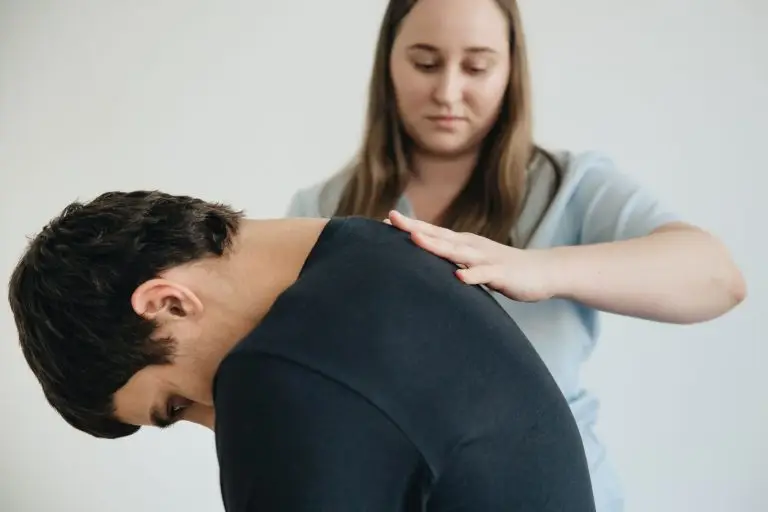
Catching a shoulder problem early can help keep it from turning into something bigger. A physical therapist can evaluate your shoulder’s motion, strength, posture and how your shoulder blade moves.
From there, physical therapy may include hands-on care, targeted strengthening, flexibility work and coaching on how you lift, reach or throw.
A simple plan
ProActive Physical Therapy, a Doctors of Physical Therapy company, helps people with shoulder pain at six San Diego County clinics: Carlsbad, Carmel Valley, Mission Valley, National City, Rancho Bernardo and Vista.
- Book. Schedule an evaluation. No referral is needed in California.
- Evaluate. A physical therapist can evaluate your shoulder and find what’s driving symptoms.
- Treat. You get a plan for mobility, strength and better movement habits.
- Return. Get back to sports, work and home projects with stronger shoulders.
When to see a doctor
See a doctor if you have a shoulder injury from a fall or collision, a shoulder that looks out of place, sudden weakness or trouble lifting your arm, or a lot of swelling or bruising. Shoulder pain with chest pain or shortness of breath needs emergency care.
FAQs
Should exercises for shoulder health hurt?
No. Mild effort is fine, but pain is a sign to stop and get the shoulder checked.
Why does my shoulder hurt when I reach overhead?
There are several possible reasons, including rotator cuff irritation or impingement. A physical therapist can evaluate your shoulder to find out.
Can posture really affect my shoulders?
It can. Rounded shoulders change how the shoulder blade moves, which can affect the joint during overhead motion.
Ready to get started? Schedule an appointment at any ProActive clinic or find a Doctors of Physical Therapy clinic near you. No referral needed.