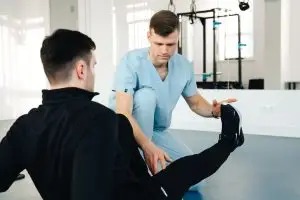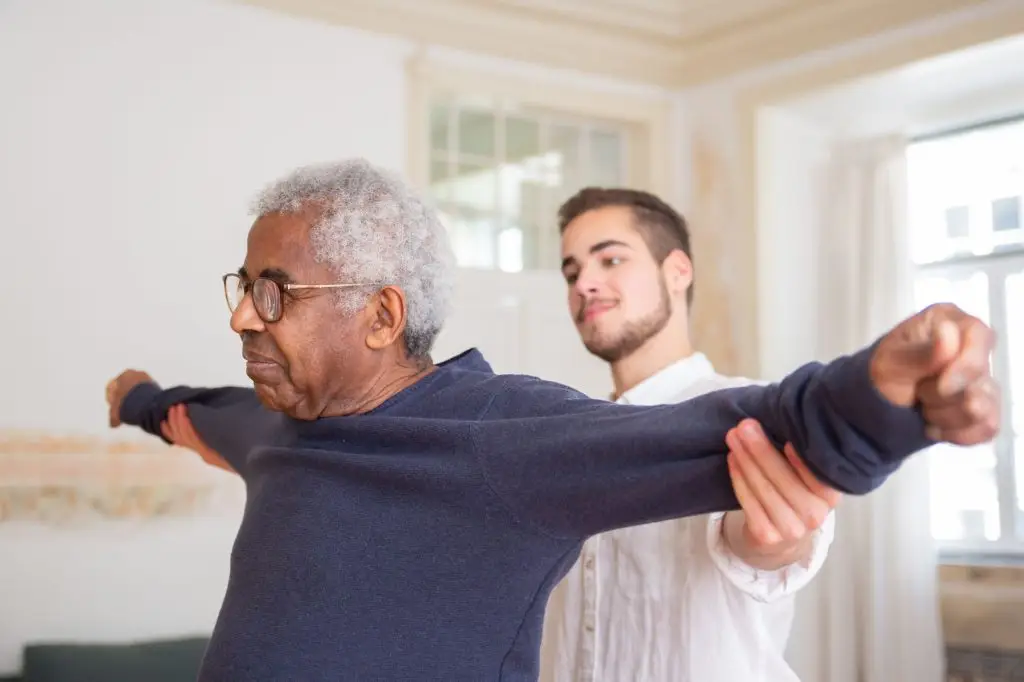
A stroke changes how the brain talks to the body, and the gap between what you want to do and what your body actually does is the hardest part of it. Physical therapy after stroke is the work of closing that gap. It is not about waiting to see what comes back on its own. It is about giving the brain the specific, repeated practice it needs to rebuild the connections that control movement.
Here is what actually drives recovery, what treatment looks like, and where to start.
What a Stroke Does to Movement
A stroke happens when blood flow to part of the brain is interrupted. The cells in that area lose oxygen, stop working, and the jobs they handled go offline.
Which jobs depends on where in the brain it happened. The effects that show up most often on the movement side include:
- Weakness on one side of the body, from a limb that feels heavy to one that will not move on command at all.
- Balance and walking trouble, often with a foot that catches or a knee that gives way.
- Loss of coordination, where the strength is there but the timing and control are not.
- Muscle tightness, called spasticity, where muscles resist being stretched and pull a joint into one position.
- Loss of position sense, meaning you cannot tell where an arm or leg is without looking at it.
Here is the part that matters most. The adult brain is not fixed. Undamaged areas can take over work the injured area used to do, and that process is driven by what you practice. Movement is the input. That is the whole premise of rehabilitation.
Why Physical Therapy After Stroke Works
The brain reorganizes around repetition, challenge, and meaning. Practice a movement often enough, at a difficulty that pushes you, in a way that connects to something you care about, and the brain commits more of itself to that movement.
That is why physical therapy after stroke does not look like a short list of stretches handed out on a sheet of paper. It looks like hundreds of purposeful repetitions of the exact movements you need back, progressed as you get better at them.
The American Heart Association and American Stroke Association guidelines for adult stroke rehabilitation and recovery point in the same direction. They call for organized, coordinated rehabilitation care and put strong weight on intensive, repetitive, task-oriented practice. Dose matters. Effort matters. Passive treatment alone does not rebuild function.
5 Proven Treatments Used in Physical Therapy After Stroke
1. Task-Specific Repetitive Training
This is the centerpiece. Instead of drilling isolated muscles, you practice the actual task: standing up from a chair, reaching for a cup, stepping over a threshold, climbing a stair. The task is broken down, practiced at a level you can do right now, and made harder as you improve.
The repetition count is the point. The brain needs volume to rewire, and a well-run session delivers far more purposeful repetitions than most people manage on their own.
2. Gait and Balance Retraining
Walking is the goal most people name first. Your physical therapist works on the pieces that make walking safe and efficient: weight shifting onto the affected side, controlling the knee, clearing the foot, turning without a stumble, and reacting when balance is challenged.
That often includes body weight supported treadmill work, overground walking with hands-on guidance, and graded balance challenges that are hard enough to matter but controlled enough to be safe.
3. Constraint Induced Movement Therapy
When an arm has some movement but goes unused because the other arm is faster, the affected arm keeps losing ground. Constraint induced movement therapy addresses that directly by limiting use of the stronger arm while the affected arm does intensive, structured practice.
The EXCITE randomized clinical trial published in JAMA found meaningful improvements in arm function that persisted at follow up. It is demanding work and it is not right for everyone, which is exactly why it takes an evaluation to know whether you are a candidate.
4. Strength and Endurance Building
Strength training after a stroke was avoided for years on the theory that it worsened spasticity. That concern has not held up. Progressive strengthening is now a standard part of care, and it solves a real problem, because weakness and deconditioning limit how much practice a person can tolerate in the first place. The more capacity you have, the more repetitions you can do, and volume is what moves the needle.
5. Spasticity and Range of Motion Management
Tight, overactive muscles can pull a joint into a fixed position, and once a joint loses range it becomes harder to use even when the strength returns. Positioning, sustained stretching, hands-on manual therapy, and bracing all help keep joints available while the motor control side catches up.
This part is coordinated with the rest of your medical team, since some people also benefit from medical management of spasticity alongside rehabilitation.
When Physical Therapy After Stroke Should Start
Rehabilitation usually begins in the hospital, often within the first days, once you are medically stable. It continues in whatever setting fits your needs, then moves to outpatient care.
What is worth knowing is that outpatient care is not a formality at the end. Recovery does not stop at an arbitrary point on the calendar. Function keeps improving with continued practice well beyond the early phase, and people who plateau in one setting often make progress again when the challenge level is raised. If someone told you that whatever you have back is all you get, that is worth a second opinion.
Who You Work With Matters
Physical therapy after stroke is skilled work. Reading movement, judging how hard to push, and adjusting a plan session by session takes clinical training and clinical judgment.
At Doctors of Physical Therapy, your care is delivered by a licensed physical therapist. Not a tech, not an aide, not an assistant. We are clinician-led from top to bottom, which means every operational role in the company, all the way up, is held by a licensed physical therapist. The people setting the standard are the people who do the work.
You can read more about our clinician-led approach or check how insurance works with us before your first visit.
Frequently Asked Questions
How long does recovery after a stroke take?
There is no single answer, and anyone who gives you a firm number is guessing. Recovery depends on the size and location of the stroke, your health going in, and how much purposeful practice you get. What the research does support is that improvement is not limited to the first weeks. Function can keep improving with continued, challenging practice, which is why ending physical therapy after stroke early is a decision worth questioning.
Do I need a doctor’s referral to start outpatient physical therapy?
In most states you can schedule an evaluation directly through direct access. After a stroke you are usually already connected to a medical team, and we coordinate with them either way. Some insurance plans carry their own referral requirements, so a quick call to confirm coverage is worth the two minutes.
Is it too late to start if my stroke was years ago?
No. People who have been told they plateaued often improve again when the practice becomes more intense and more specific to what they are trying to do. A plateau frequently reflects the challenge level of the program rather than a hard ceiling on the nervous system. An evaluation will tell you what is realistic in your case.
Will physical therapy help my arm as much as my leg?
Arm recovery is often slower than leg recovery, partly because the arm has finer motor demands and partly because people compensate with the stronger arm and stop using the affected one. Approaches like constraint induced movement therapy exist specifically to counter that. Whether your arm is a good fit for that kind of program depends on how much active movement you have now.
Start Where You Are
The brain responds to what you ask of it. If your recovery has stalled, or you were discharged before you felt finished, that is a reason to get evaluated rather than a reason to settle. Schedule an appointment with a licensed physical therapist and find out what the next step actually looks like. You can also browse all of our services to see how we work.