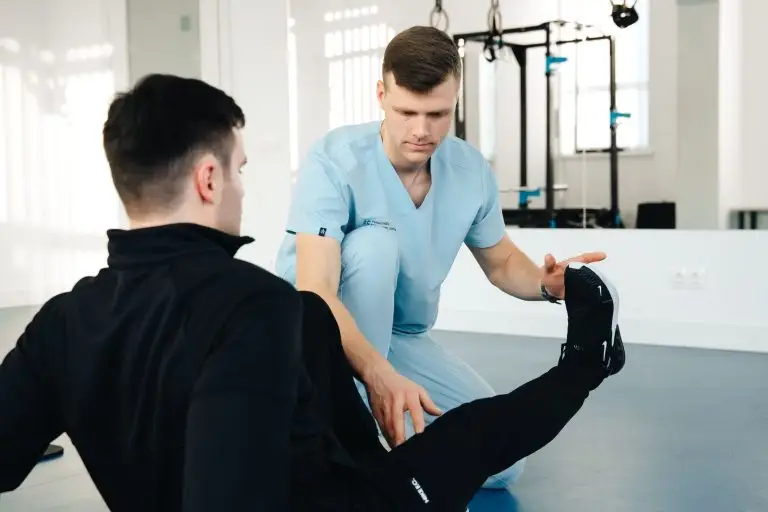
Wrist pain has a way of running your whole day. Typing hurts. Lifting a full coffee mug hurts. Push-ups are off the table. And because the wrist is small, it is easy to assume the problem is small too, so you wait it out. Wrist pain physical therapy exists because waiting rarely settles it. Your wrist is eight small bones, two forearm bones, and more than a dozen tendons that all have to move cleanly together. When one piece stops doing its job, the rest overwork to cover, and the ache spreads.
Here is what is usually driving it, and what wrist pain physical therapy actually does about it.
What Is Really Causing Your Wrist Pain
Wrist pain is rarely one dramatic injury. Far more often it is a load problem that built up quietly. The most common drivers we see:
- Tendon overload on the thumb side. Often called de Quervain’s tenosynovitis. Gripping, lifting a baby, and phone use all aggravate it.
- Median nerve compression. Carpal tunnel syndrome. Numbness, tingling, and night symptoms in the thumb, index, and middle fingers.
- Irritation on the pinky side. The triangular fibrocartilage complex, which takes a beating from twisting and pushing.
- Stiffness left over from a sprain or a fracture. The bone heals and the joint never gets its motion back.
- Thumb base arthritis. Common, often mistaken for a wrist problem.
Two people can describe the same ache and have completely different problems, which is why the evaluation matters more than the label.
How Wrist Pain Physical Therapy Finds the Source
A wrist evaluation does not start and end at the wrist. Your physical therapist measures grip strength and compares sides, tests wrist and forearm motion, screens the median and ulnar nerves, and checks how your elbow, shoulder, and neck are contributing. A stiff shoulder or a desk setup that keeps your forearm rotated will quietly overload the wrist every hour of the workday.
Then they watch you do the thing that hurts. Type. Grip. Push up from a chair. That is where the real cause usually shows itself, and it is the standard of care laid out in the clinical practice guidelines physical therapists work from.
5 Wrist Pain Physical Therapy Treatments That Help
1. Hands-On Joint and Soft Tissue Work
The small joints of the wrist and the forearm need to glide. When they stiffen, every motion pinches. Manual therapy restores that glide and calms the surrounding tissue so you can tolerate the strengthening that follows.
2. Nerve Gliding When the Nerve Is Involved
If numbness and tingling are part of your symptoms, the median nerve may be irritated where it passes through the carpal tunnel. Nerve glide exercises help the nerve move freely through the tissues around it instead of getting tugged. The American Physical Therapy Association clinical practice guideline for carpal tunnel syndrome supports conservative care, including manual and exercise-based treatment, before surgery is considered for most cases.
3. Progressive Loading for Grip and Forearm Strength
This is the part people skip, and it is the part that keeps the pain from coming back. Tendons get stronger by being loaded on purpose, in a controlled amount, with the load going up over time. Your therapist builds grip, wrist extension, wrist flexion, and forearm rotation strength in a sequence your tissue can tolerate, then keeps adding until your wrist handles real life again.
4. Splinting and Activity Changes, Used on Purpose
A splint can be genuinely useful, especially at night when your wrist curls into a position that squeezes the nerve. What a splint is not is a long-term plan. Braced tissue gets weaker. Your therapist uses bracing to buy calm, then walks you off it while strength takes over. Activity changes work the same way: temporary adjustments to grip, keyboard height, and how you carry things, not a permanent list of everything you can no longer do.
5. Fixing What the Wrist Is Compensating For
Radial-sided wrist pain, the kind on the thumb side, is one of the most commonly misread complaints in primary care, and published guidance on first-line management emphasizes getting the specific diagnosis right before treating. It also frequently travels with elbow and shoulder problems. Good wrist pain physical therapy treats the chain, not just the sore spot: shoulder blade control, elbow mobility, and the desk or workstation habits feeding all of it.
Who Actually Treats You at Doctors of Physical Therapy
Your appointment is with a licensed physical therapist. Not a tech, not an aide, not an assistant. That person evaluates you, treats you hands-on, and adjusts the plan as your wrist responds.
Doctors of Physical Therapy is clinician-led from top to bottom. Every operational role in the company, up to and including the executive team, is held by a licensed physical therapist. That is not a marketing line, it is the reason clinical decisions stay clinical. You can read more about how we are built.
You Do Not Need a Referral to Get Started
In most cases you can book directly with a physical therapist without a doctor’s referral first. That matters, because the earlier wrist pain physical therapy starts, the less strength there is to rebuild later.
We work with most major plans, and you can check how insurance works here. If you would rather see the full range of what we treat first, the services page lays it out. When you are ready, schedule an appointment and let a licensed physical therapist put hands on it.
Frequently Asked Questions
Does wrist pain physical therapy work for carpal tunnel syndrome?
For many people, yes. Conservative care is the recommended starting point for mild and moderate carpal tunnel syndrome, and that includes manual therapy, nerve gliding, splinting, and activity changes. Severe or rapidly worsening nerve symptoms are a different conversation and should be evaluated by a physician as well. Your physical therapist will tell you plainly if your case looks like one that needs a surgical opinion.
Should I rest my wrist or keep using it?
Neither extreme. Complete rest lets strength and motion fade, and pushing through sharp pain keeps the tissue irritated. The useful middle is loading the wrist in a controlled way that your tissue tolerates, and adjusting the everyday tasks that flare it. That balance is specific to your case, which is what the evaluation is for.
Do I need an X-ray or MRI before starting physical therapy?
Usually not. A physical therapist is trained to screen for the findings that warrant imaging, and most wrist pain does not need it to begin treatment. If something in your exam suggests a fracture, an unstable ligament, or a condition outside our scope, we refer you out. Imaging when it is needed, not by default.
What should I bring to my first wrist appointment?
Your insurance card, a list of medications, any imaging or records you already have, and the clothing you would normally wear to work or train. Also useful: your actual keyboard or mouse if your symptoms are worst at your desk, or a photo of your workstation. Seeing your real setup often explains more than the exam does.